 Slabline Concreting Co.
 House & Shed Slabs
A structural slab is the one job you cannot afford to guess, because the whole build sits on it. We design house and shed slabs to AS 2870 off a real site classification, Class A through E, which sets the thickness, the footing depth and the reo, then name all of it on the quote with the MPa and the vapour barrier. VBA registered for the structural work, so it passes inspection rather than fails on the paperwork.
What this job includes.
- ✓New-build house slabs designed to AS 2870 off a site classification
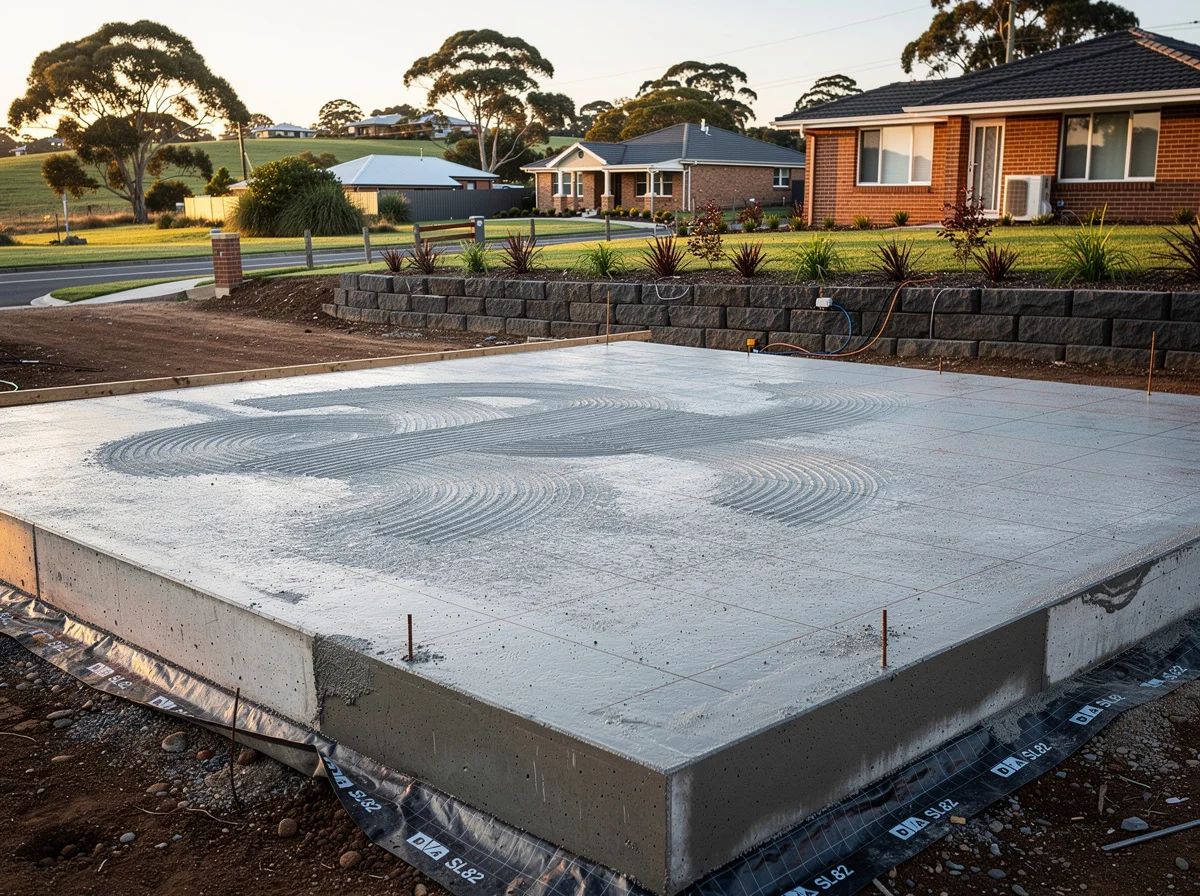
- ✓Shed and garage slabs on a compacted base with mesh and joints
- ✓Footings, reo, MPa and slump named on the quote, never just a slab
- ✓Vapour barrier laid and lapped under habitable slabs
- ✓VBA-registered work and building approval sorted for structural slabs
A structural slab is a designed slab, not a guessed slab
A house slab and a shed slab are not just thicker driveways. They are engineered structures, designed to AS 2870 off a real site classification, that have to hold a building plumb and level for the life of it. Slabs over the domestic threshold in Victoria are VBA-registered work, and the slab thickness, the footing depth, the reo and the vapour barrier all come off the engineer’s design, not a flat rate the concreter writes on the back of an invoice. We hold the registration, we work to the design, and we name every line of it on the quote.
What the site classification actually decides
The classification (Class A through E under AS 2870) comes from a soil test on your block, and it sets four things:
- The slab thickness (typically 100 to 150 mm for a domestic raft)
- The edge beam depth and the reo in the beams (deeper and heavier on reactive clay, lighter on Class A)
- The mesh sized to the slab (SL72 for a stable site, SL82 for reactive)
- The vapour barrier under any habitable slab, lapped at the joins
A house slab guessed off a flat rate, no soil test, no engineer’s design, is the one that moves. The cracks show up at the corners of the windows within a few summers, and the warranty conversation gets very awkward because no one can produce an AS 2870 design.
What an itemised house or shed slab quote includes
- The slab area in m², the design type (waffle pod, raft, footings) and the thickness, named
- The site classification (Class A through E) and the soil-test reference
- The reo schedule, edge beam depths and any post-tension or pier requirements off the engineer’s design
- The mix supplier (Boral, Hanson, Holcim) and the strength (N25 or N32), named on the page
- The vapour barrier product and lap detail for habitable slabs
- The compacted base, the formwork, the pour and screed plan, and the control joints
- The VBA registration number, the building permit reference, and the inspection schedule
- The 10-year slab and footings warranty in writing, with the AS 2870 paperwork
If the operator quoting your house or shed slab cannot put the engineer’s design number and the classification on the quote, ask why. The answer is usually “we will sort it on the day”, which is the line you do not want to hear before you build a house on it.
Priced by the m², itemised line by line.
The m² and thickness, the site classification, the mesh and reo, the MPa, the base prep, the finish, control joints, and the guarantee. Not one round number for a slab.
- 1 Square metres and thickness. The price broken down by the m² and the slab thickness, 100 mm for a standard driveway, stepped up for reactive soil or vehicles. Not one round number for "a slab".
- 2 The site classification (AS 2870). The site classification, Class A through E, that the slab and footings are designed to. This is the line a cheap quote skips, and it is what decides whether the slab cracks or holds.
- 3 The mesh and reo. The mesh and reo named and sized, SL72 or SL82 and any bars, set to the soil classification or the loads the slab carries, never a one-size slab over loose fill.
- 4 The MPa and slump (AS 3600 / AS 1379). The concrete strength in MPa and the slump, ordered to AS 1379 and placed to AS 3600. "Concrete" with no strength named is the warning sign, not the number.
- 5 Base prep and vapour barrier. The excavation, the compacted base, and the vapour barrier under a habitable slab, each itemised, never a pour straight onto loose fill that lets damp through later.
- 6 The finish and sealing. The finish named, broom, exposed aggregate, coloured or honed, and the sealing on a decorative slab, so you know exactly what surface you are getting and what it costs.
- 7 Control joints and the guarantee. The control joints cut at the right spacing so it cracks on the line, and the 10-year guarantee on the slab and footings in writing, with the AS 2870 paperwork where the slab is structural.
What happens, step by step.
Free measure and set-out
We measure the area, check the soil and the falls, mark out the slab and talk through the finish and the spec, then put a written by-the-m² quote in your hands.
Excavate to depth
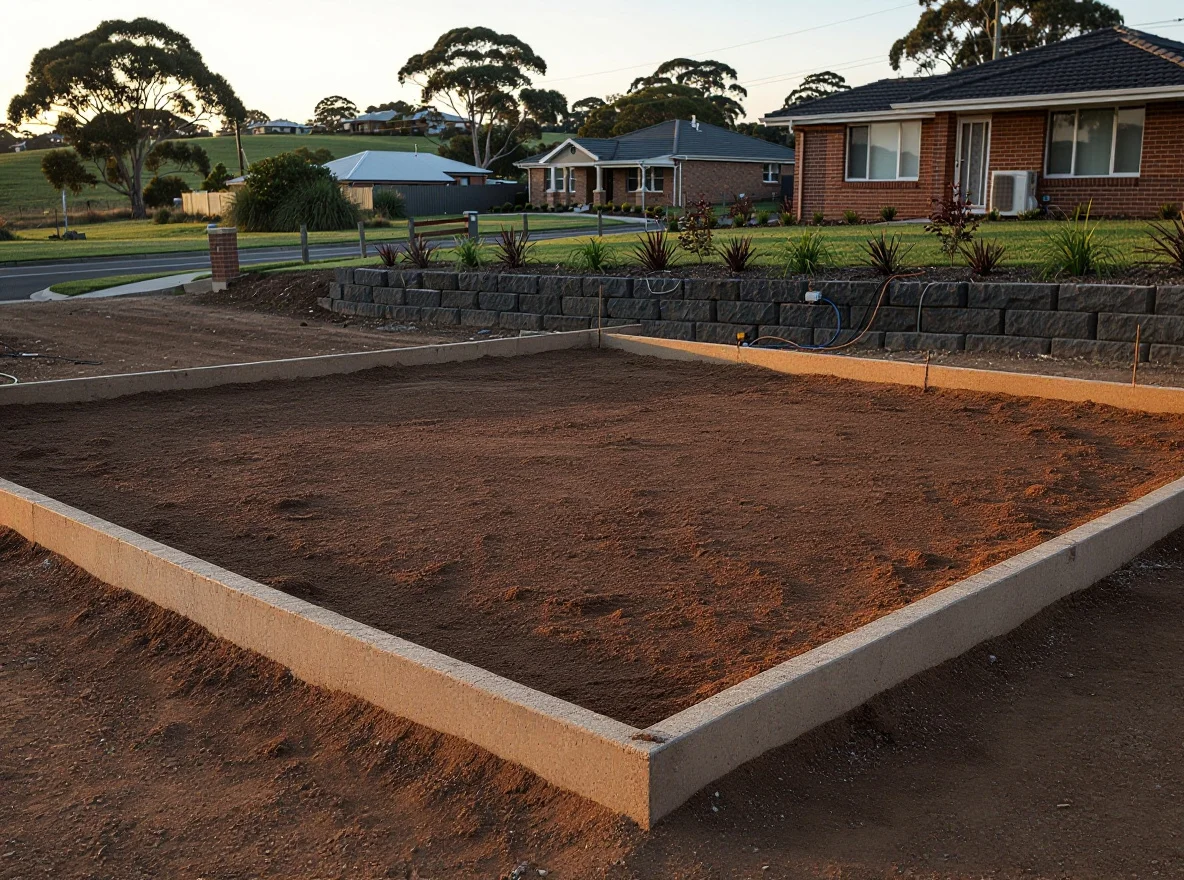
We strip the topsoil and excavate to the right depth for the slab, the falls and the soil, and cart the spoil away, so the slab sits on solid ground and drains the way it should.
Compacted base and vapour barrier
We bring in and compact the road base in layers, then lay the vapour barrier under a habitable slab and lap it at the joins, because a slab is only as good as what is under it.
Form up and place the mesh and reo
We set the formwork to the line and the falls, then place the mesh and any reo on chairs to the design, so the steel sits in the slab, not on the ground.
Pour and finish
We pour the concrete to the named strength, screed it to level, and work the finish, broom, exposed aggregate, coloured or honed, the way you signed off on the quote.
Cure and cut control joints
We cure the slab so it reaches its strength instead of drying out and cracking, cut the control joints at the right spacing, seal a decorative finish, and hand over the guarantee in writing.
The paperwork behind the price.
Public liability to $20M, and a 10-year slab & footings, all in writing, all on request.
We hold a Victorian Building Authority registration for the structural slab and footing work in Victoria, and we carry public liability insurance, so you are covered on site. House and shed slabs are designed to AS 2870 off a real site classification, and the concrete is supplied to AS 3600 and AS 1379 at a named strength. The guarantee is a 10-year written guarantee on the slab and footings, the part that cracks and heaves first, plus the manufacturer materials warranty on the genuine mix and the sealer. All in writing, with exclusions named.
House & Shed Slabs jobs we’ve done.
House & Shed Slabs: common questions.
Do you design the slab to a soil test?
What is the difference between a slab for a house and one for a shed?
Do I need building approval and a registered concreter?
Is a vapour barrier really needed under a house slab?
Get a free, itemised quote you can actually read.
Tell us what you need. We’ll book a walkthrough and send a quote with the work itemised, not just a number.